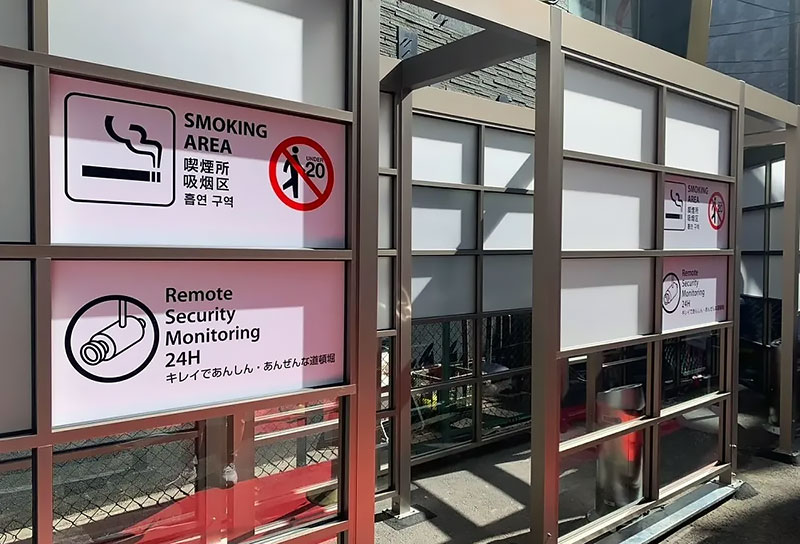
First Designated Smoking Area in Dotonbori Osaka
First Designated Smoking Area in Dotonbori, Osaka
If you’ve walked through Dotonbori recently, you may have noticed something new among the neon signs and street food stalls and may have missed the area’s first official outdoor smoking zone. Opened in mid-February 2026, this facility marks the city’s fresh approach to tackling littering and sidewalk smoking in one of Osaka’s busiest tourist districts.
What’s Happening in Dotonbori
Rather than adding another restaurant or attraction, local authorities introduced a designated smoking area after deciding that loudspeaker announcements weren’t enough to stop people from smoking while walking — or discarding cigarette butts on the ground.
The initiative comes from the Osaka Minami–Dotonbori Overtourism Countermeasures Promotion Council, working together with NTT Docomo, which supplied remote security cameras so the unstaffed site can be monitored off-site.
Dotonbori welcomes around 30 million visitors a year, including international travellers, and officials hope that by clearly marking a place where smoking is allowed, fewer people will light up elsewhere — helping preserve the area’s famous street food culture and overall cleanliness.
The smoking area sits on the south side of Tazaemonbashi Bridge, just one bridge east of the iconic Ebisubashi Bridge — a strategic spot slightly away from the main sightseeing crush.
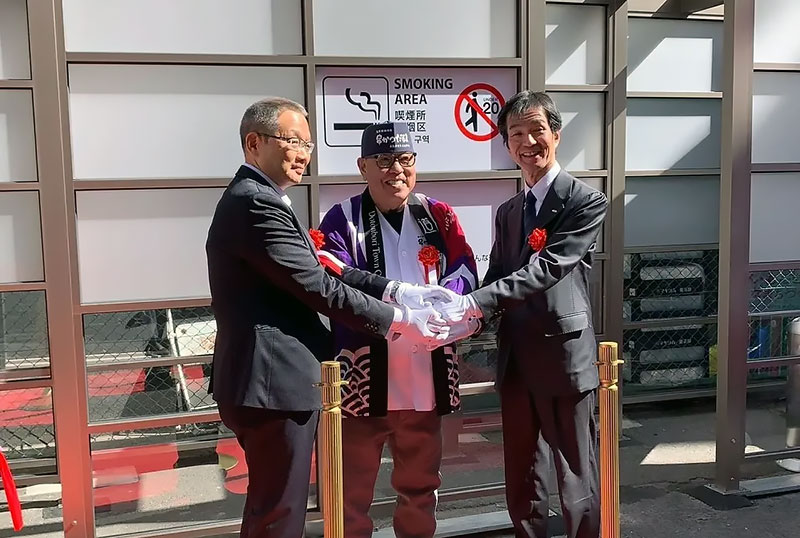
A practical fix — but not a perfect one
There’s a catch: the space isn’t enclosed, and it doesn’t appear to have a roof. That means smoke can easily drift into surrounding walkways, especially during busy periods. While Tazaemonbashi is quieter than Ebisubashi, it’s still far from secluded, so non-smokers may continue to feel the impact.
Conclusion
Whether this new designated area truly improves conditions in Dotonbori remains to be seen. For now, it represents Osaka’s latest attempt to balance heavy tourism with livability — keeping streets cleaner while accommodating smokers in a controlled space. Visitors should expect more small but meaningful changes like this as Japan’s most popular districts adapt to ever-growing crowds.