Best Flea Markets in Kyoto
Best Flea Markets in Kyoto
In the last few years of visiting Kyoto, I found that this beautiful city isn’t just about temples, tea houses, and cherry blossoms. When you explore a little further, you will discover that it’s also a paradise for treasure hunters. Come weekends, I used to explore leafy shrine grounds, bustling temple courtyards, and relaxed city parks, and I discovered some of the best flea markets in Kyoto, packed with antiques, handmade crafts, vintage kimono, and irresistible street snacks.
These markets are where Kyoto’s living culture shines brightest, giving travellers a chance to shop like locals while soaking up centuries of tradition. But remember, most traders don’t really speak English, so you’d best have a translator ready or go with a local. Below are some of the handicraft and flea markets to visit in Kyoto, and in no particular order, because every one of them offers something special.
Kamigamo Handicraft Market

The Kamigamo market is held at the UNESCO-listed Kamigamo Shrine, and it focuses on contemporary art and craftsmanship. Expect ceramics, natural-dyed clothing, accessories, woodwork, and artisanal foods, many made in small batches with sustainability in mind.
With wide skies, grassy lawns, and the shrine’s iconic sand cones (tatesuna) nearby, browsing here feels calm and unrushed. It’s one of Kyoto’s three largest handicraft markets and a beautiful blend of ancient setting and modern creativity.
Date: Fourth Sunday of every month & Setsubun Holiday
Hours: 9:00 AM – 4:00 PM
Kiyomizudera 1000 Market

Taking place near Kiyomizu-dera, this incredible market coincides with the temple’s monthly observances dedicated to Fudō Myōō. Vendors line the historic approach roads selling antiques, vintage kimonos, pottery, household goods, handicrafts, and seasonal treats. Shopping here feels extra special thanks to the dramatic temple backdrop, which is a perfect mix of sightseeing and treasure hunting. I mean, who doesn’t want to visit Kyyomizu-dera? And better during the market day.
Date: 28th of every month
Hours: 9:00 AM – 4:00 PM
Hyakumanben Handicraft Market

Set in the tranquil grounds of Hyakumanben Chion-ji Temple, this market highlights handmade and artisanal goods rather than antiques. Think jewellery, ceramics, textiles, woodwork, natural soaps, and organic foods — all sold directly by the creators. It’s relaxed, friendly, and popular with students, families, and travellers who enjoy chatting with artists and learning about their craft.
Date: 15th of every month
Hours: 8:00 AM – 4:00 PM
Kobo-san Temple Flea Market (Toji Market)

Hosted at Tō-ji Temple, Kobo-san is Kyoto’s biggest and most famous flea market, drawing close to 1,000 stalls each month, which is massive! It commemorates Kobo Daishi, the founder of Shingon Buddhism, and combines spiritual heritage with lively bargain-hunting. Browse antiques, ceramics, tools, calligraphy scrolls, and vintage kimonos while enjoying taiyaki and yakisoba beneath the iconic five-story pagoda. This is one of the most highly recommended flea markets in Kyoto for tourists.
Date: 21st of every month
Hours: 7:00 AM – 4:00 PM
Umekoji Handicraft Market

Held in the open lawns of Umekoji Park, this modern craft market features ceramics, leather goods, artwork, textiles, accessories, and speciality foods from creators across Kansai. With its casual park vibe (and proximity to the Kyoto Railway Museum), it feels like a neighbourhood gathering, and perfect for slow browsing on a sunny afternoon. Try to arrive early to catch all the vendors, as some may leave around 2-3pm.
Date: First Saturday of each month (except Jan, May, & Aug)
Hours: 9:00 AM – 4:00 PM
Tenjin-san Shrine Flea Market

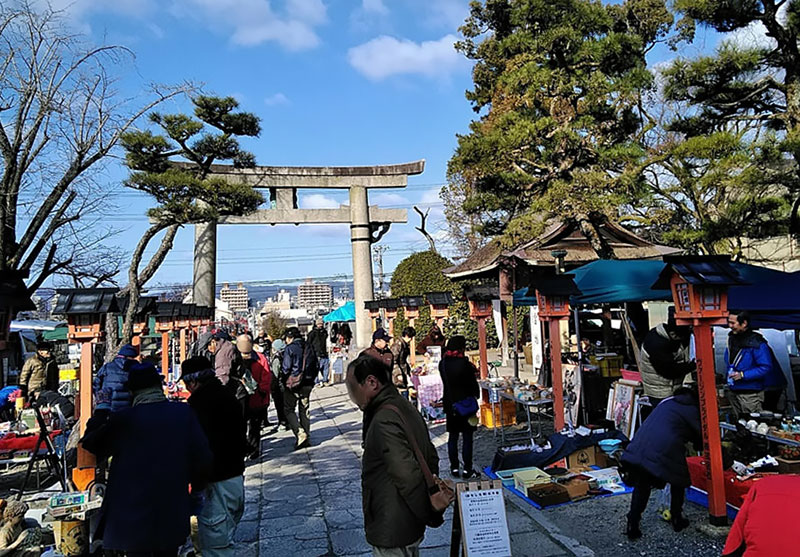
The Tenjin-san Shrine Flea Market is set within Kitano Tenmangū Shrine, which honours Sugawara no Michizane, the deity of scholarship. To my surprise, there are around 1,000 stalls that offer antiques, pottery, woodblock prints, vintage clothing, and calligraphy tools. It’s especially beautiful during plum blossom season, when pink blooms frame the market lanes, and by adding takoyaki and sweet mochi, and you’ve got one of Kyoto’s most atmospheric monthly flea markets. Go early to avoid the huge crowds.
Date: 25th of every month
Hours: 7:00 AM – 4:00 PM
Heian Nominoichi (Heian Shrine Antique Market)
Held near Heian Shrine in Okazaki Park, this well-loved antique market features around 100+ dealers selling old tools, antiques, vintage items, and unique second-hand finds. It often has a lively mix of collectables alongside handmade pieces, making it a great stop for serious treasure hunters and casual browsers alike. Visitors will never know what to expect here, so if you have time, just do some flea-market browsing.
Date: Usually around the 10th of each month (often the second Saturday)
Hours: Typically 10:00 AM – 4:00 PM (some vendors start earlier)
Kyoto City Hall Flea Market
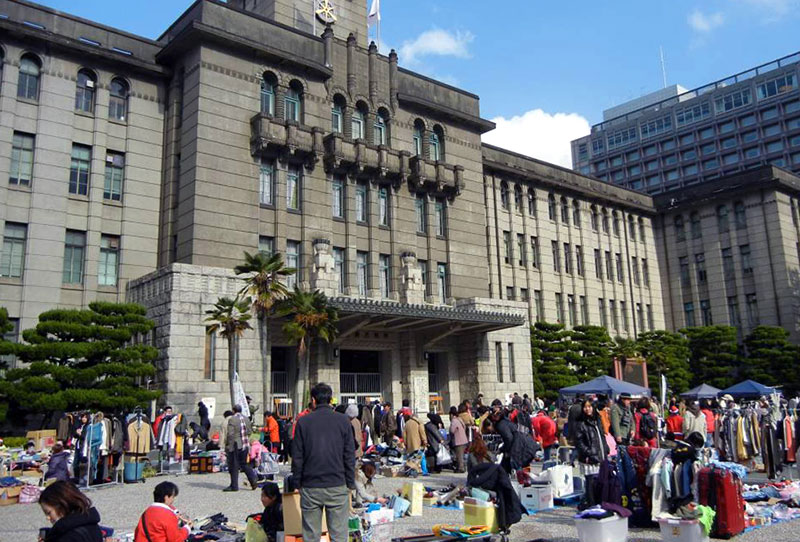
A large community flea market is held at Kyoto City Hall Plaza, just steps from Kyoto Shiyakusho-mae Station. You can find about 100 vendors that focus on a reuse culture, offering second-hand goods and everyday items while promoting sustainability. Dates change monthly, but it’s one of Kyoto’s best city-based non-temple flea markets. Google to find out the future dates.
Date: Specific monthly dates (for example: Jan 18, Feb 11, Mar 8 in 2026)
Hours: Usually 10:00 AM – 3:00 PM
Heian Shrine Area Flea & Marche Events (Okazaki Park)
Beyond the regular antique market, Okazaki Park hosts seasonal フリマ・マルシェ (flea + handmade market) pop-ups throughout the year. These casual events combine vintage items, crafts, food trucks, and local snacks — perfect for a relaxed afternoon stroll when you’re already sightseeing around the Heian Shrine area.
Date: Seasonal/irregular (varies by event)
Hours: Usually around 10:00 AM – 4:00 PM (check closer to your visit)
O-Higashi-san Flea & Maruuche Markets (near Higashi-Honganji Temple)
Held around the O-Higashi-san plaza near Higashi Hongan-ji, these are smaller rotating flea markets and outdoor “maru-che” events such as フリマ楽KYOTO and みんなのフリマ. They’re community-focused, low-key, and usually appear on weekends or public holidays. Very local, so expect full Japanese speaking vendors, unless they are the younger vendors who can speak basic English.
Date: Occasional weekends & holidays (event-based)
Hours: Typically 10:00 AM – 3:00 or 4:00 PM (varies by market)
Kyoto Flea Markets Calendar (Compressed Version by Week)
Kyoto Flea Market Calendar (Quick Guide)
Around the 10th – Heian Nominoichi Antique Market
📍 Near Heian Shrine / Okazaki Park
🕙 10:00 AM – 4:00 PM
15th – Hyakumanben Handicraft Market
📍 Hyakumanben Chion-ji Temple
🕗 8:00 AM – 4:00 PM
21st – Kobo-san Flea Market (Toji Market)
📍 Tō-ji Temple
🕖 7:00 AM – 4:00 PM
25th – Tenjin-san Shrine Flea Market
📍 Kitano Tenmangū Shrine
🕖 7:00 AM – 4:00 PM
28th – Kiyomizudera 1000 Market
📍 Kiyomizu-dera
🕘 9:00 AM – 4:00 PM
Seasonal / Craft Markets
1st Saturday (except Jan, May, Aug) – Umekoji Handicraft Market
📍 Umekoji Park
🕘 9:00 AM – 4:00 PM
4th Sunday (+ Setsubun) – Kamigamo Handicraft Market
📍 Kamigamo Shrine
🕘 9:00 AM – 4:00 PM
Selected dates only – Kyoto City Hall Flea Market
📍 Kyoto City Hall Plaza
🕙 10:00 AM – 3:00 PM
Irregular/seasonal – Forest Handmade Market (Shimogamo)
📍 Tadasu no Mori Forest, Shimogamo Shrine
🕙 Typically 10:00 AM – 4:00 PM
Handmade crafts, accessories, pottery, baked goods, plus the live Forest Concert in a beautiful woodland setting.
Seasonal / weekends – Okazaki Park Flea & Marche Events
📍 Okazaki Park
🕙 ~10:00 AM – 4:00 PM
Occasional weekends & holidays – O-Higashi-san Flea & Maruuche Markets
📍 Near Higashi Hongan-ji
🕙 ~10:00 AM – 3:00 / 4:00 PM
Conclusion
Kyoto’s flea markets are more than places to shop; they are a window into everyday life, creativity, and tradition. Visitors can experience the Japanese way of flea markets by visiting some of these interesting markets. Try to make time for at least one during your visit to some of the best flea markets in Kyoto, and chances are you’ll leave with a unique souvenir, a full belly, and memories far richer than anything you’d find in a souvenir store.